
Free vs. Paid Email: What You Really Pay With
Free email feels effortless, but the real cost often shows up later. This piece explores the hidden trade-offs between free and paid email — from incentives and lock-in to control, privacy, and long-term trust.

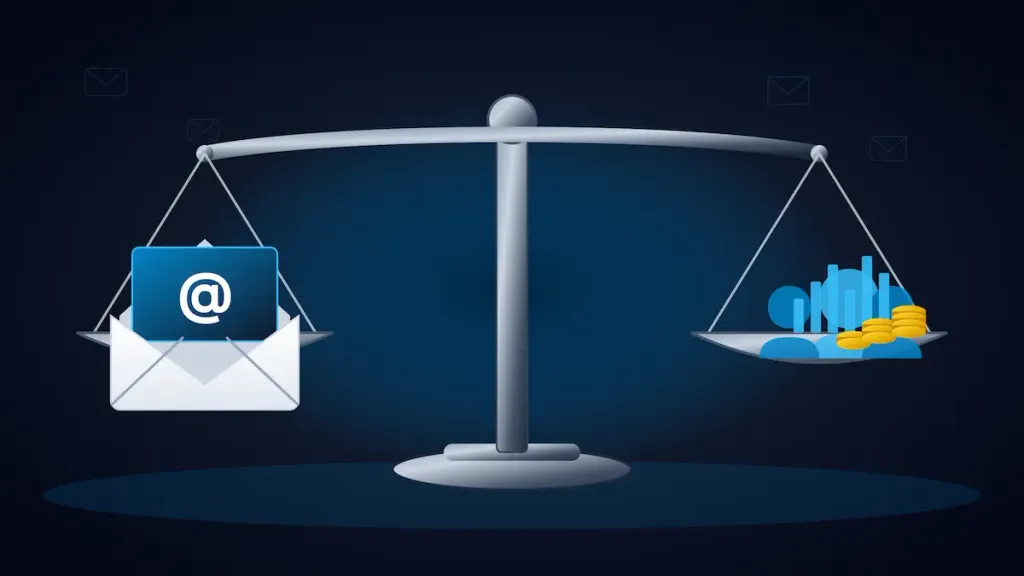
Email is one of the few digital tools relied upon every single day, yet rarely questioned. Addresses are picked once—often years ago—and online lives are built around them. Messages, logins, archives, recovery details, and personal history quietly accumulate in a single place.
When discussing free vs. paid email, the conversation usually stops at price: Why pay when Gmail works fine? What do you really get for a monthly fee?
Cost is the least interesting difference. The real distinction is what you pay with when you don't pay with money.
What "Free" Really Pays For
Running a global email service is expensive. Infrastructure, storage, spam filtering, abuse prevention, uptime guarantees, security teams, and compliance require significant funding. When a user isn't paying directly, the provider must recover those costs through alternative means.
For a business-focused provider's free tier, see my Zoho Mail free plan review.
This doesn't automatically imply malicious intent, but it fundamentally shifts corporate incentives:
- Feature Priorities: Product decisions, interface nudges, and feature rollouts are designed around platform engagement and data retention rather than user control.
- Monetisation Models: Free services are frequently funded by ad networks, behavioural profiling, metadata extraction, or ecosystem lock-in.
- Indirect Customers: When you don't pay for the product, your attention and data become the product being monetised.
Paid Email Changes the Incentives
Paying for email establishes a direct customer relationship. The service is directly accountable to you: if it fails, degrades, or shifts in an undesirable direction, you can take your business elsewhere.
However, taking your email address with you is only possible if you use your own custom domain name. If you rely on a provider's domain (e.g. @fastmail.com or @proton.me), you remain locked into their ecosystem regardless of whether you pay them. The email address itself remains one of the quietest, most effective forms of vendor lock-in when owned by the provider rather than the individual—a concept detailed further in Why Using Your Own Domain for Email Makes Sense.
Paying for an inbox removes the commercial pressure to extract value from user attention, metadata, or behavioural signals. While paid providers still face operational trade-offs, their business model depends on retaining user trust rather than monetising user activity.
Free vs. Paid Email: A Direct Comparison
| Feature | Free Email Providers | Paid Email Providers |
|---|---|---|
| Primary Revenue Model | Advertising, data profiling, ecosystem lock-in | Direct subscriptions |
| Vendor Independence | Low (bound to provider domains like @gmail.com) |
High (seamless integration with custom domains) |
| Customer Support | Automated bots, community forums, self-help docs | Accountable human support teams |
| Product Focus | Engagement metrics and platform integration | Privacy controls, stability, and utility |
The Compounding Cost of Inbox Lock-In
Email addresses accumulate decades of history, account logins, subscriptions, professional relationships, and personal archives. The longer an address is maintained, the more costly—both socially and practically—it becomes to change.
Free email services can quietly turn into permanent dependencies, even when they no longer align with your privacy expectations. Paid email makes the arrangement explicit: you know precisely what you are paying, what you are receiving, and what occurs if you decide to cancel.
Human Support When Things Go Wrong
A major difference that only becomes visible during an account emergency is customer support.
- Free Providers: Rarely offer access to real, accountable human support. Account lockouts, security flags, or compromised credentials are typically handled by automated algorithms and community forums.
- Paid Providers: Provide direct, human-led support channels to help resolve access issues, security flags, and technical misconfigurations.
I experienced this exact advantage recently with Google Workspace: after reaching out to support on two separate occasions, I was connected and on a live screen share with a real human support agent in under ten minutes to resolve my issue.
For a system that acts as the primary recovery key to your entire digital identity, the absence of human support introduces significant operational risk.
Summary
Free email works best when convenience outweighs long-term consequence. Paid email makes sense when your inbox becomes an indispensable operational tool where continuity, accountability, and identity control matter most.

