You Might Finally Be Able to Change Your Gmail Address
Gmail is testing a long-requested feature that would let users change their email address without starting over — raising bigger questions about email identity and control.

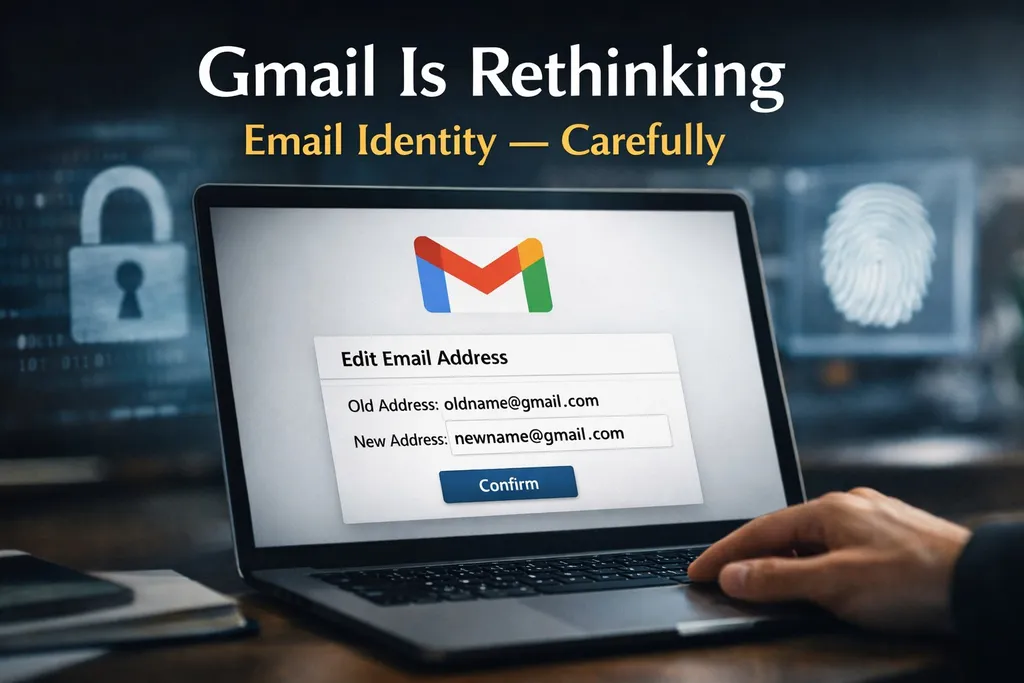
For years, one of Gmail’s most frustrating limitations has been surprisingly simple: you couldn’t change your email address without abandoning your account.
If you picked a cringey username in the mid-2000s, changed your name later in life, or simply outgrew your original address, the answer was always the same — create a new account and start again.
That could finally be about to change.
What’s changing
The change was first spotted in a non-English (Hindi) version of Google’s Help Centre, suggesting Google may be preparing to allow users to change their Gmail address without creating a new account.
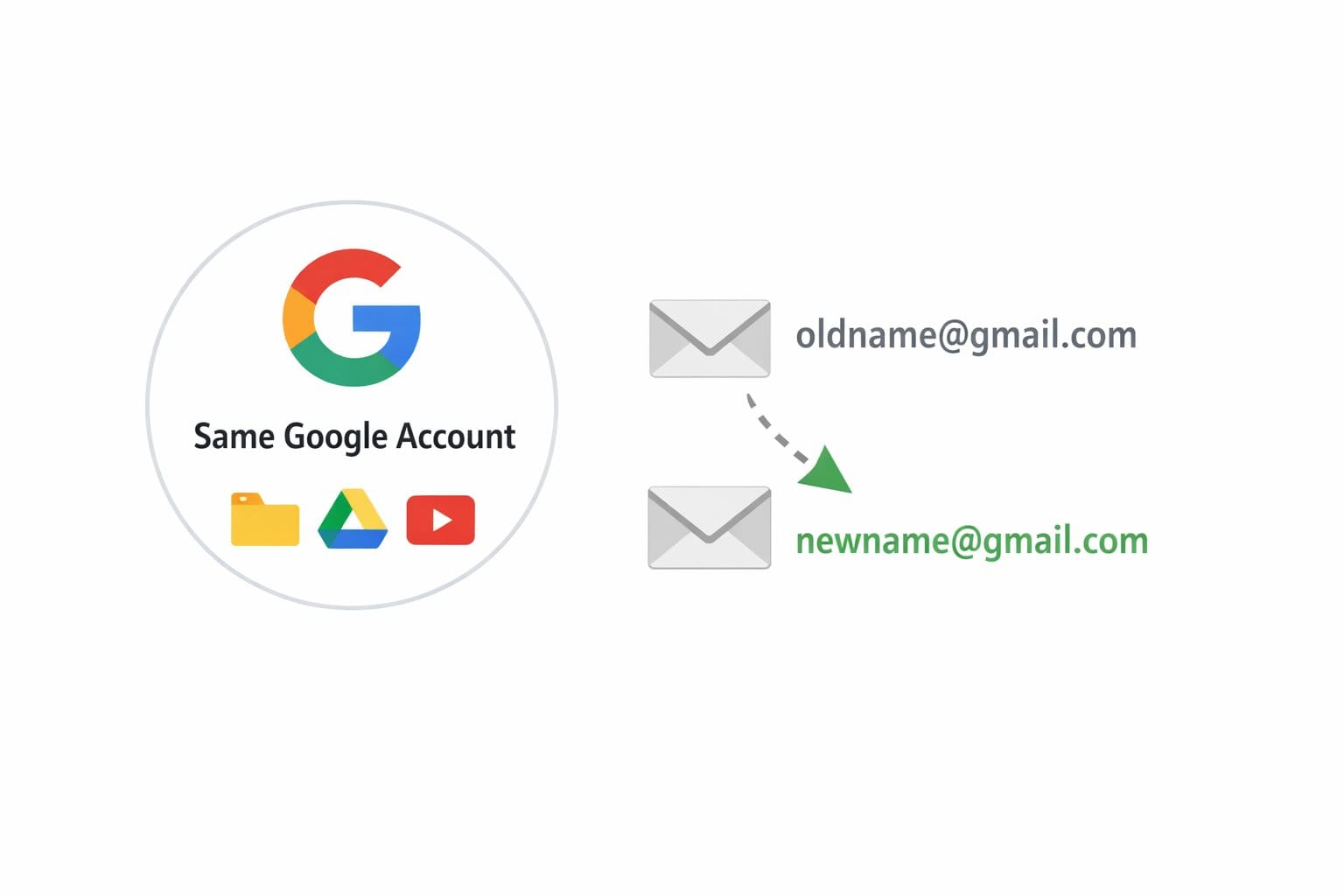
If this rolls out more widely, users would be able to switch from one @gmail.com address to another — without losing access to:
- Existing emails
- Google Photos
- YouTube history
- Google Drive files
- Maps data and subscriptions
In other words, the account stays the same. Only the email identity changes.
What seems to be changing isn’t the Gmail account itself, but the address attached to it.
Google appears to be testing a way for users to move to a new @gmail.com address while keeping the same account, inbox, and data — with the old address continuing to work as an alias.
That distinction only makes sense when you understand how Gmail was originally designed. From the beginning, Gmail wasn’t treated as a disposable address — it was built to become a long-lived identity and, eventually, infrastructure. I explore how that happened in detail in how Gmail became the world’s default inbox.
How it’s expected to work
According to the help documentation:
- Your old Gmail address becomes an alias, so messages sent to it will still arrive
- Your new address becomes primary for sending and logging in
- All existing data remains untouched
- The feature is rolling out gradually, so not everyone will see it immediately
There are also some guardrails:
- You won’t be able to create another new Gmail address for 12 months
- You won’t be able to delete the new address once it’s created
This suggests Google is treating email identity as something more permanent — not something to change casually.
Why this matters (beyond embarrassment)
At first glance, this looks like a quality-of-life update for people tired of old usernames.
But it points to something bigger.
For a long time, Gmail has blurred the line between email address and account identity. Your address isn’t just where mail arrives — it’s your login, your recovery key, and the name attached to a vast digital footprint.
Allowing users to change that address without losing the account suggests Google is finally acknowledging that:
- Email addresses age
- People’s identities change
- Long-term accounts need flexibility
That’s a quiet but important shift.
A contrast with privacy-first email
It’s also worth noting that many privacy-first email providers have supported this idea for years — through aliases, custom domains, and flexible address management.
In those systems, your account and your address are intentionally separate.
Gmail moving in this direction brings it closer to modern email design — but still within Google’s tightly controlled ecosystem.
Should you use it?
If the feature becomes widely available, it will be genuinely useful for:
- People changing names
- Anyone stuck with an old or unprofessional address
- Users who want continuity without disruption
But it’s also a reminder of a bigger question worth asking:
How much control do you really have over your email identity?
Being able to rename an address is helpful.
Owning your email identity outright is better.
Final thoughts
This isn’t a revolutionary change — but it is a meaningful one.
Email addresses are long-lived digital identifiers, and Gmail finally seems to be treating them that way.
If you’ve ever hesitated to move email providers because of history, data, or habit, this update shows just how sticky email identity really is — and why it’s worth choosing carefully in the first place.
Email addresses were never designed to be permanent digital identities, but over time, they became exactly that.
Google hasn’t yet announced this change in English, and the details could still evolve before it reaches all users — but the direction of travel is clear.
Get the weekly email
A short weekly roundup on email, privacy, and digital trust. No promos. Unsubscribe anytime.

