Why Spam Isn’t Disappearing — It’s Just Changing Shape
Spam hasn’t disappeared — it has adapted. From mass junk to quiet impersonation, modern spam blends into routine digital life.

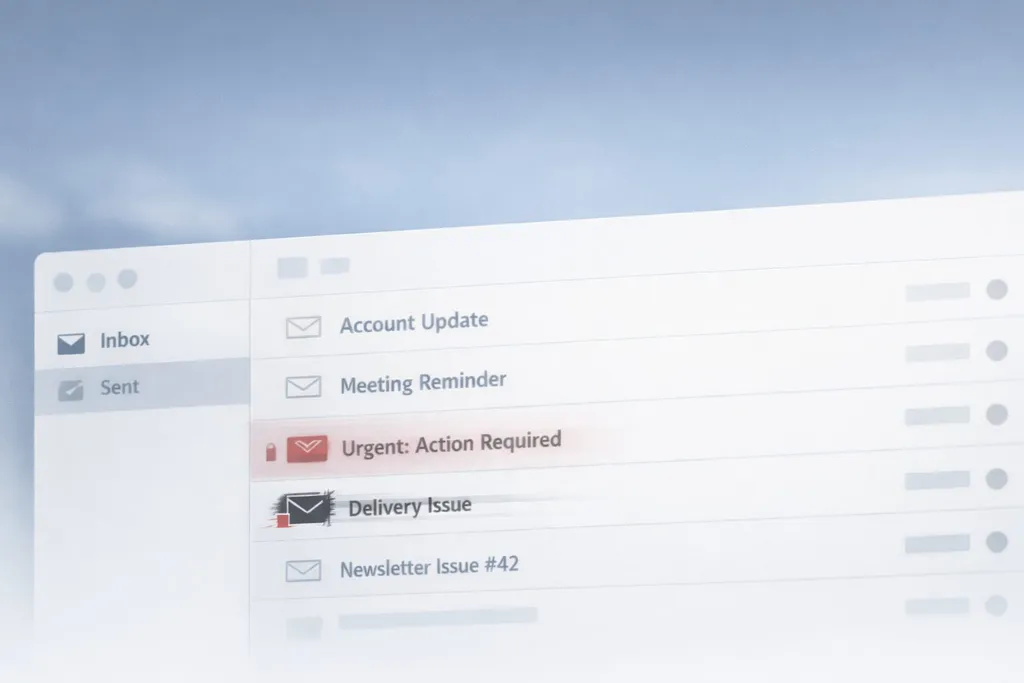
Spam feels like it should be disappearing by now. Filters are smarter, inboxes are more aggressive, and most people know not to click obvious junk. Yet spam hasn’t vanished — it’s changed. The volume is no longer the whole story.
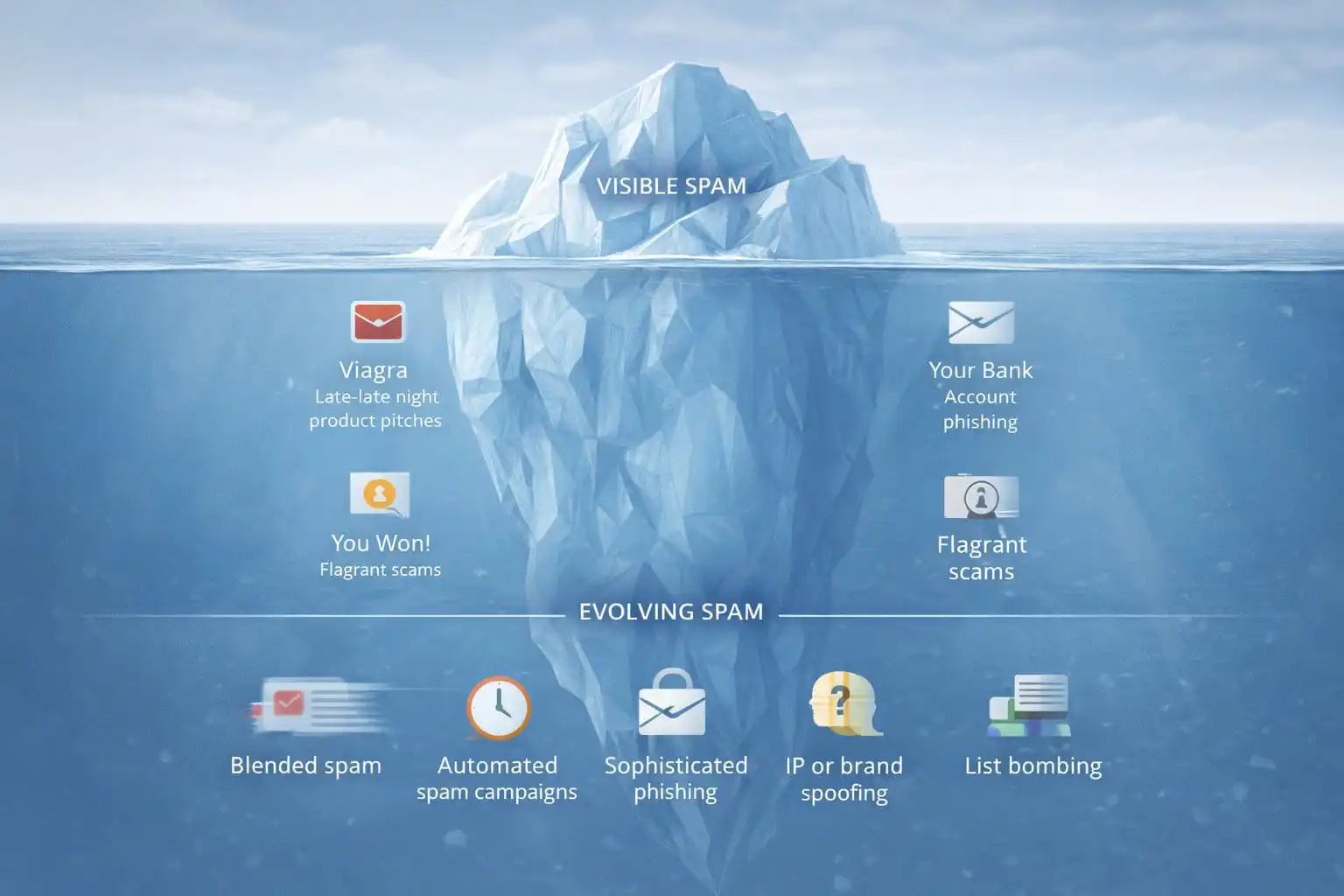
What’s declined is the obvious, mass-market spam that once flooded inboxes by the thousands. What’s grown instead is quieter, more targeted, and often harder to separate from legitimate email. The problem hasn’t gone away; it’s become more selective.
That shift matters, because it changes what spam is — and what it costs. Not just in annoyance, but in trust, attention, and the way inboxes are designed to cope with risk rather than communication.
That change didn’t happen by accident. It was forced.
As email providers got better at blocking high-volume junk, the economics of spam shifted. Sending millions of identical messages stopped working. Deliverability dropped. Domains were burned faster. IPs were blocked before campaigns even got going.
So spam adapted.
Instead of trying to reach everyone, it started trying to reach the right someone — the shift that defines modern phishing
From noise to precision
Modern spam is less about flooding inboxes and more about slipping through them.
Messages are shorter. Language is cleaner. Branding is copied convincingly. Some emails reference real services you use, real purchases you might have made, or real problems you’re conditioned to fix quickly.
A delivery problem.
A security alert.
A payment issue.
Each one is designed to create just enough urgency to override caution — not through panic, but through familiarity.
That’s why today’s spam often doesn’t look like spam at all. It looks like routine digital life.
Why fewer messages can cause more damage
The old model of spam was noisy and inefficient. Most people ignored it. Filters caught the rest. The cost was irritation.
The newer model is quieter — and far more expensive when it succeeds.
A single well-timed phishing email can:
- Trigger an account takeover
- Expose years of personal or financial data
- Cascade into multiple compromised services via password resets
The harm is no longer proportional to volume. One successful message can outweigh thousands that never land.
That’s the real shift: spam has moved from being a numbers game to a trust game.
| Measure | Estimated figure | What it shows |
|---|---|---|
| Global spam volume | ~160 billion emails/day | Spam remains economically viable at massive scale |
| Share of global email traffic | ~45–47% | Nearly half of all email is still unwanted or abusive |
| Phishing emails sent daily | ~3.4 billion | Phishing is lower volume, but high impact |
| Share of email that is phishing | ~1–2% | Low volume, disproportionately high damage |
| Trend in phishing quality | Increasingly AI-assisted | Messages are harder to distinguish from legitimate mail |
Tools like DuckDuckGo Email Protection exist precisely because spam and phishing haven’t disappeared — they’ve adapted.
Email didn’t fail — it hardened
It’s tempting to read this as proof that email is broken. In reality, the opposite is true.
Email providers have spent years tightening filters, authenticating senders, and isolating suspicious traffic. The result is that traditional spam became less viable inside email.
Much of this hardening happens through authentication systems like SPF, DKIM, and DMARC — tools that don’t make email private, but do make impersonation and large-scale abuse harder and more expensive.
So attackers looked elsewhere — or adjusted their tactics within it.
Email didn’t disappear as a target because it’s weak. It remained a target because it’s central.
Your email address is still:
- Your account recovery mechanism
- Your long-term digital record
- The place serious services expect to reach you
That makes it worth the effort to get right — or to exploit.
The wrong mental model
The biggest mistake is still thinking of spam as “bad messages”.
Spam today is better understood as unauthorised attempts to borrow trust.
Sometimes that trust comes from:
- A familiar sender name
- A known brand
- A realistic scenario
- Or simply the fact that the message arrived at all
Once you see it that way, the persistence of spam makes sense. As long as trust exists, someone will try to counterfeit it.
Why this isn’t going away
Spam isn’t disappearing because nothing fundamental has changed:
- Sending remains cheap
- Receiving remains open
- Human attention remains exploitable
Filters reduce exposure, but they don’t remove incentives. And every improvement on the defensive side reshapes behaviour on the offensive side.
This isn’t a bug in the system. It’s a consequence of how open communication works.
What actually changes the outcome
The most effective response to modern spam hasn’t been perfection — it’s been containment.
Limiting how much damage a single failure can cause.
Designing systems that assume mistakes will happen.
Separating identities, addresses, and access where possible.
In other words: reducing the blast radius.
Spam doesn’t need to be eliminated to be beaten. It needs to be made unprofitable, unreliable, and recoverable.
The uncomfortable truth
Spam isn’t a phase the internet will grow out of.
It’s a permanent pressure that shapes how inboxes evolve, how accounts are secured, and how trust is rationed online.
The question was never whether spam would disappear.
It was whether we’d notice that it changed shape — and adjust how we design, use, and protect the systems it targets.
Get the weekly email
A short weekly roundup on email, privacy, and digital trust. No promos. Unsubscribe anytime.
