When to Use Email (and When Not To)
Email isn’t the problem — misuse is. Here’s when email works best, and when calls, chat, or meetings are the smarter choice.

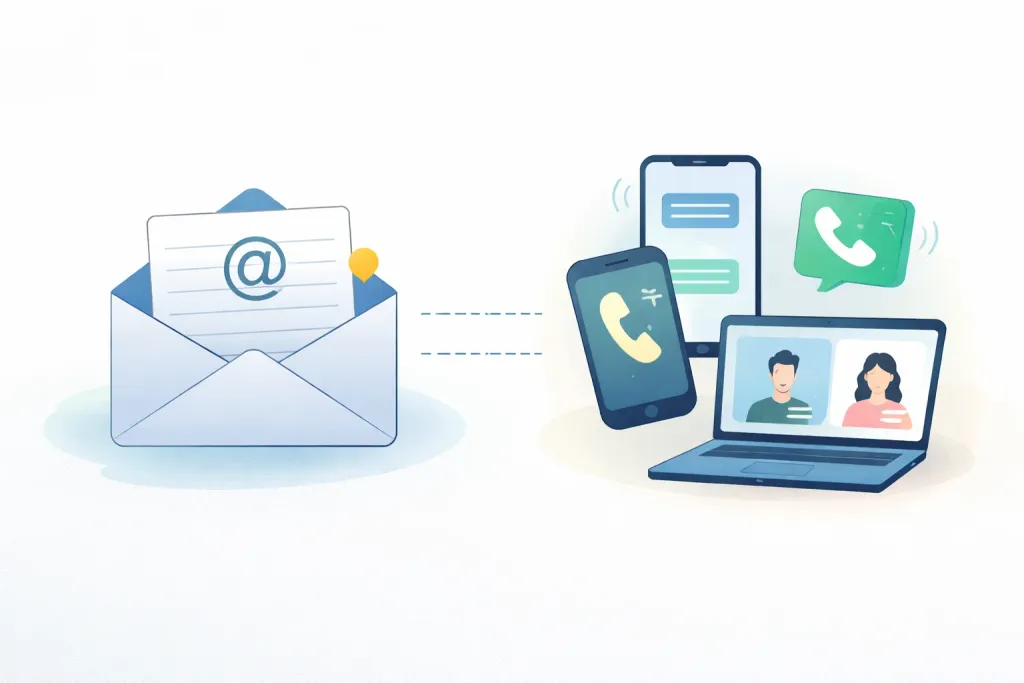
Email is often blamed for poor communication — but the real problem is usually simpler: we’re using the wrong tool.
Used well, email is one of the most effective ways to communicate without needing both people at the same time.
Used badly, it becomes a slow, messy version of chat. The difference isn’t the technology — it’s how and when we use it.
Phone calls, chat apps, and video meetings often feel urgent, even when they aren’t — a pattern many workplace studies have linked to communication fatigue. They demand attention immediately. Email, by contrast, gives people space.
Why email feels less intrusive
A phone call requires two people to be available at the same time. Even a short conversation can interrupt your workflow and pull you out of focused work, something productivity researchers have long warned about. Email works differently. Both the sender and the recipient can engage when it suits them.
That’s one of email’s core strengths: it doesn’t demand an immediate response. You can reply when it suits you, instead of being pulled into someone else’s timetable.
Email lets you respond on your own terms
Managing your time is easier when you can choose when to reply.
When I ran my own business, I often answered emails outside traditional office hours — not because I was “always on,” but because it suited my schedule. Clients didn’t expect instant replies. What they valued was clarity and thoughtfulness.
Email supports that kind of measured communication. It encourages considered responses instead of reactive ones.
Written communication creates a record
Another advantage of email is that it creates a traceable record.
That matters more than people realise. Agreements, decisions, and details don’t have to rely on memory. You can search, refer back, and clarify later. Try doing that with a phone call from three weeks ago.
For anything involving instructions, timelines, or commitments, that record is often invaluable.
When phone or video might be better
Email isn’t the best tool for everything.
A call or video meeting can be better when:
- The situation is genuinely urgent
- Tone, empathy, or relationship-building are the priority
- A complex issue needs fast back-and-forth discussion
Real-time communication has its place. The problem is when it becomes the default for things that don’t actually need to happen right away.
Setting expectations with others
If you prefer using email, it helps to make that clear.
Simple signals — like mentioning response windows in your signature or encouraging email for non-urgent topics — can set expectations without sounding rigid. Most people appreciate knowing how and when they’ll hear back.
Clear expectations reduce friction more than constant availability ever does.
Final thoughts
Email isn’t perfect. Sometimes it leads to longer threads than a quick call might have solved.
But more often, it gives both people time to think before responding — and that usually leads to better outcomes.
For communication that still depends on email, long-term control matters too — especially when your address becomes part of your identity. I wrote more about this when looking at how HEY tried to redesign who gets access to your inbox — and why that approach didn’t fully work for me.
If you often feel drained by unexpected calls or unnecessary meetings, email can offer a calmer, more manageable rhythm of communication — one that respects your time and your attention.
Get the weekly email
A short weekly roundup on email, privacy, and digital trust. No promos. Unsubscribe anytime.

