Email Wins Over Phone, Chat, and Awkward Video Calls Every Time
I explain why I tend to favour email over phone calls, chat apps, and video calls — because email lets you manage communication on your own terms without interruption.
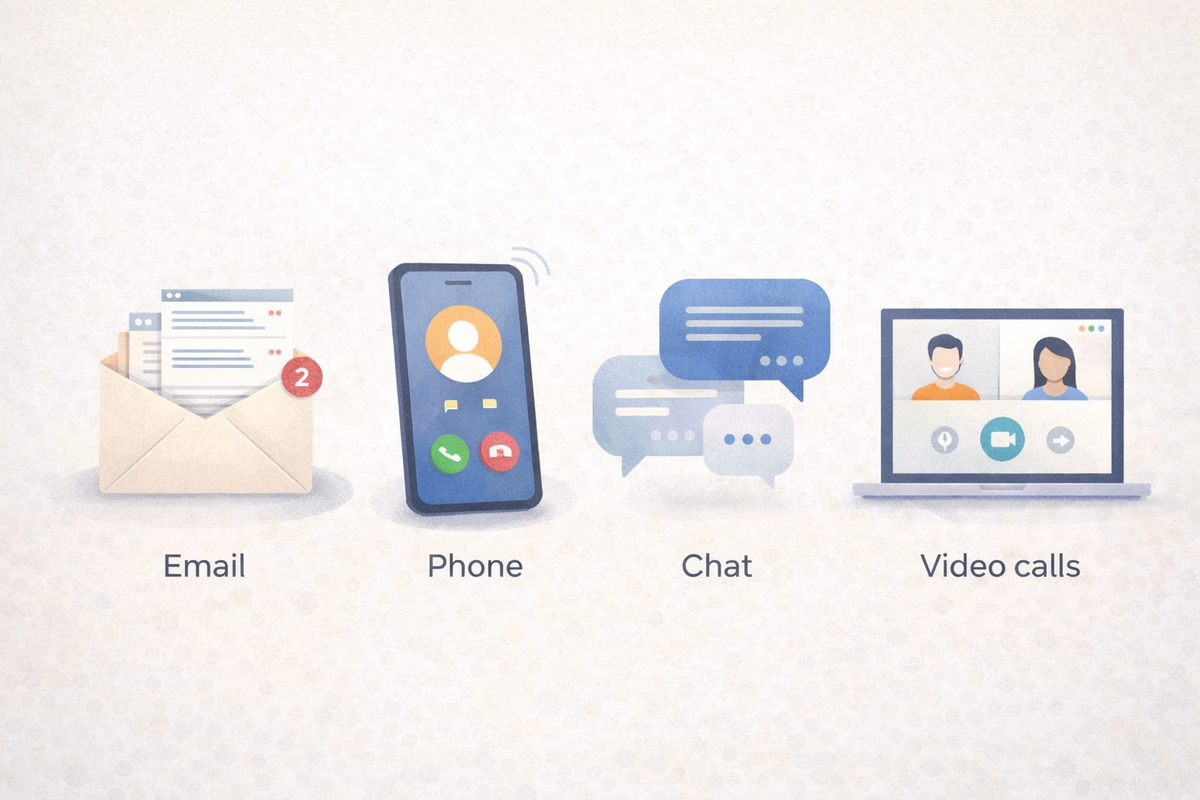
I’ve always preferred email as a way of communicating — both for personal and business interactions. It’s not that I think other methods are wrong, but email tends to be less intrusive, more flexible, and easier to manage around the rest of life’s demands.
In contrast, phone calls, chat apps, and video calls can feel urgent — even when they aren’t — and they often demand attention in the moment. This post explains why I prefer email and how it fits into a balanced communication approach.
Why email feels less intrusive
A phone call requires both people to be available at the same time. Even a short synchronous conversation interrupts your workflow and pulls you out of whatever you were doing. Email, by contrast, lets both sender and recipient engage when it suits them.
This aligns with one of email’s fundamental strengths: it’s asynchronous. There’s no expectation of an immediate response, so it doesn’t force you into someone else’s timetable.
Email allows you to respond on your own terms
Managing your time is easier when you can choose when to respond. When I ran my own business, I often checked and replied to emails outside traditional office hours — without feeling like I was on-call 24/7. No client complained; some even praised the responsiveness precisely because it was thoughtful and measured rather than reactive.
Written communication creates a record
Another advantage of email is that everything you send and receive creates a traceable record. This matters in both personal and professional contexts. If details need to be revisited later, you can search through your inbox rather than trying to recall what was said in a phone or video call.
When phone or video might be better
I’m not suggesting that email is the best tool for every situation. For example:
- If the message is urgent, a call can be more direct.
- If tone, empathy, or relationship building is the priority, synchronous communication can help.
But for day-to-day exchanges where clarity, convenience, and respect for each person’s time are important, email tends to be the more effective choice.
Setting expectations with others
If you lean on email, it helps to be clear with colleagues or clients about your communication style. Setting boundaries — like indicating response windows in your signature or preferring email for non-urgent messages — can make expectations explicit without diminishing professionalism.
Final thoughts
Email isn’t perfect. Sometimes it leads to long back-and-forth exchanges that could have been a short conversation. But more often than not, it gives both people the space to think before they respond, which usually leads to clearer outcomes.
If you’re someone who feels drained by unexpected calls or awkward video meetings, email might offer a more manageable rhythm of communication that respects your schedule and your attention.