Does Apple even like email?
Apple excels at shaping user experiences — but email remains the one part of its ecosystem that feels merely functional, not thoughtfully reimagined.

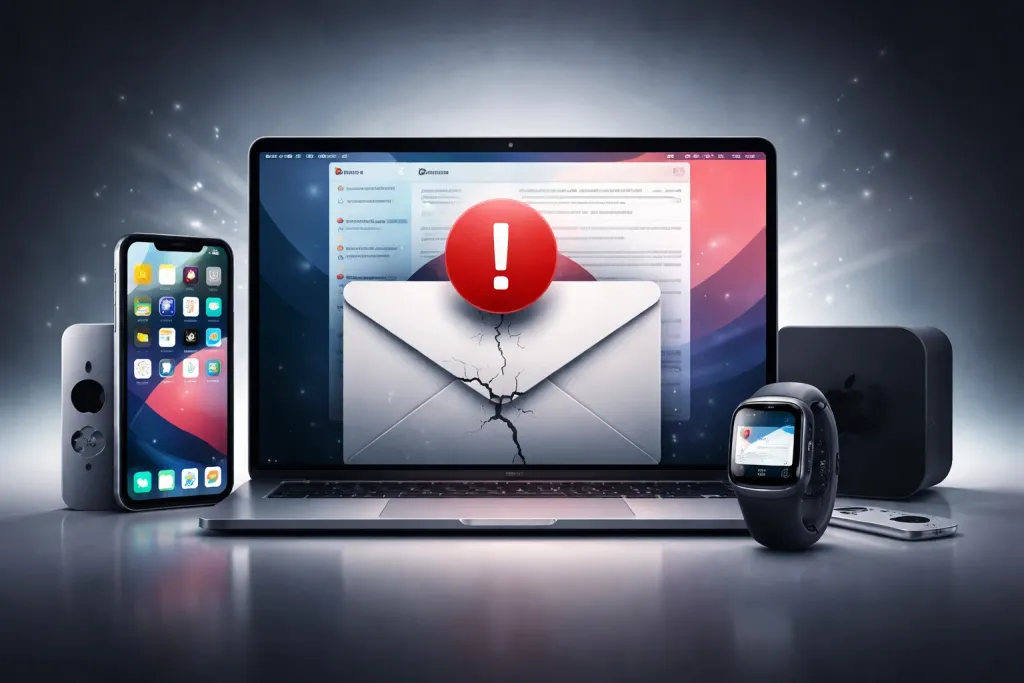
Why Apple Still Hasn’t Made Email Feel Like an Apple Product
I am deeply embedded in the Apple ecosystem. I have used an iPhone since the original model. I am writing this on a current-generation MacBook. I wear an Apple Watch and use an Apple TV daily. I generally trust Apple’s design instincts, and I often defend its decisions when others are impatient with them.
That is why writing this feels slightly uncomfortable.
Email is the weakest part of the Apple experience.
Not because Apple Mail is broken. It works reliably. It syncs quickly. It rarely crashes. iCloud Mail delivers messages consistently and handles storage without drama. On a functional level, the system performs its duties competently.
The issue is not failure. It is ambition.
Apple rarely settles for “fine” in categories it considers important. When Apple commits to a product, it attempts to reshape expectations. With email, however, the experience feels maintained rather than advanced. The difference is subtle, but persistent.
What Apple’s Email Actually Looks Like
On paper, iCloud Mail offers everything most people expect. You receive an @icloud.com address. Mail syncs across iPhone, iPad, and Mac seamlessly. Privacy commitments are strong, particularly compared to advertising-funded platforms.
iCloud+ adds meaningful upgrades. Custom domains allow you to use your own address. Multiple aliases make identity separation easier. Hide My Email generates disposable addresses for online sign-ups. For users who want simplicity with a privacy-conscious foundation, this is a coherent package.
Yet the overall experience does not feel like a category Apple is actively pushing forward.
The web interface remains serviceable but conservative. Visual updates arrive occasionally, but the structure feels closer to a system control panel than a workspace designed around modern communication patterns. Filtering tools exist, but remain basic. Rules are functional, not expansive. Organisational features cover fundamentals without moving beyond them.
Apple recently introduced inbox categories designed to group messages into areas such as transactions, updates, and promotions. Conceptually this mirrors approaches pioneered elsewhere. In practice, automated categorisation introduces risk. When important messages are misclassified, the cost of missing them outweighs the benefit of tidier presentation. For users who depend on email for identity, finance, and work, predictability matters more than visual order.
There is no strong sense of a guiding philosophy behind the inbox. No bold rethinking of message flow. No distinctive organisational approach that makes the experience feel uniquely Apple in the way iMessage or Photos do.
iCloud Mail functions effectively. It integrates neatly. It respects privacy expectations. But it does not feel ambitious.
Innovation Happened Elsewhere
Email as a protocol has not changed dramatically in decades, but inbox design has evolved significantly.
Google restructured the inbox with tabs, priority sorting, and increasing levels of AI-assisted writing and summarisation. I examined this more closely in my piece on how Gmail became the world’s default inbox. Whether one approves of the direction or not, it represented a clear philosophy about scale and automation.
Microsoft embedded email deeply into productivity infrastructure. Focused Inbox, advanced rules, Sweep tools, and tight integration with calendar and task management reframed Outlook as business workflow software rather than just a mailbox.
HEY challenged the underlying model entirely. Its sender screening and structured separation between correspondence and newsletters were opinionated and divisive, but undeniably intentional. The service articulates its philosophy openly at The HEY Way.
Proton Mail defined itself around privacy-first architecture, encryption, and structural minimisation of provider visibility. The moment you use it, you understand what it prioritises. I unpacked that contrast in detail in my breakdown of what makes Proton Mail feel fundamentally different.
Each of these providers communicates a clear stance.
Apple’s stance is harder to summarise.
The Pattern of Delay Without Reframing
Apple is not always first to market with features. Historically, it has waited until it can implement ideas in a way that aligns with its philosophy. The original iPhone launched without features common on competing devices. Apple often enters a category later but reshapes it decisively.
With email, that second step never arrives.
Apple introduces improvements, but rarely reframes the problem. Inbox categories followed years after Gmail normalised tabs. Enhancements tend to align with established patterns rather than redefine them. The changes feel incremental rather than directional.
Apple’s Mail app and iCloud Mail service look and operate like Apple products. The typography is clean. The integration with the operating system is seamless. Notifications feel native. But there has been no recent moment where the inbox experience shifts meaningfully or reorients user expectations.
There has been no “this is how Apple thinks email should work” moment.
Why Email Sits Outside Apple’s Core Strength
Apple performs best when it controls the full stack. Hardware, operating system, services, and ecosystem incentives align in a single direction. The company can shape not only the interface but the underlying rules of interaction.
Email does not fit that model.
Email is a shared, decentralised system governed by open standards and external senders. Banks, retailers, mailing lists, employers, and automated systems all participate. Many of those actors optimise for engagement or urgency, not calmness or coherence.
Apple can design the surface experience, but it cannot dictate how the rest of the internet behaves. That constraint limits how radically it can reshape the inbox without breaking compatibility.
This contrasts sharply with services like iMessage. Within iMessage, Apple controls the entire environment: delivery mechanisms, interface rules, encryption model, and interaction patterns. The experience feels cohesive because Apple governs the ecosystem.
With email, Apple governs only the client and its own servers. The broader system remains beyond its control.
The Strategic Incentive Problem
There is also a strategic reality.
Apple invests most heavily in services that deepen ecosystem dependence. Messaging, photos, health data, and payments increase switching costs and reinforce hardware loyalty.
Email does not.
Email remains portable by design. You can migrate providers. You can forward mail. You can use alternative clients. Even custom domains, now supported by iCloud+, emphasise portability rather than lock-in.
This portability differentiates email from services built around proprietary data formats or closed networks. It also means that no matter how polished Apple’s Mail app becomes, the category itself resists enclosure.
That dynamic may reduce Apple’s incentive to transform it aggressively.
What an Apple-Led Email Vision Might Look Like
If Apple decided email deserved leadership rather than maintenance, the shift would likely begin with philosophy rather than features.
Apple’s strongest products reduce noise, protect attention, and simplify complex systems. Modern email often does the opposite. It amplifies urgency, blurs boundaries between human and automated messages, and requires constant triage.
Much of what makes inboxes usable today occurs before messages reach the user. Filtering systems, reputation frameworks, and spam infrastructure quietly determine what appears in the primary view. I explored that hidden layer in more detail in my analysis of how spam filtering quietly reshaped email.
An Apple-led approach might not focus on adding more categories or filters. It might focus on boundaries. It could differentiate more clearly between personal communication and system-generated noise. It could prioritise predictable visibility over algorithmic sorting. It could integrate privacy not only as encryption, but as protection from unwanted reach.
Such a shift would likely aim to make email feel less like a stream that demands management and more like a structured space that respects time and intention.
At present, Apple’s email experience largely reflects the existing ecosystem rather than attempting to reshape it.
The Noticeable Absence
Apple has transformed multiple categories by reframing how technology feels to use. Music players, smartphones, tablets, and wearables were not invented by Apple, but were redesigned around new assumptions about interaction and control.
Email remains different.
The tools are competent. The service is stable. The integration is tight. Yet there is no clear philosophical imprint that distinguishes Apple’s inbox from the broader landscape.
The absence stands out precisely because Apple’s other products are so deliberate.
Apple has the capability to build a distinctive email experience. The question is not whether it can. It is whether it considers the category strategically important enough to redefine.
For now, the inbox inside the Apple ecosystem remains reliable, private, and well-integrated.
It does not yet feel like something Apple is trying to reinvent.
Get the weekly email
A short weekly roundup on email, privacy, and digital trust. No promos. Unsubscribe anytime.

